
Aesthetic Device Maintenance: What Compliance and Real Responsibility Really Mean
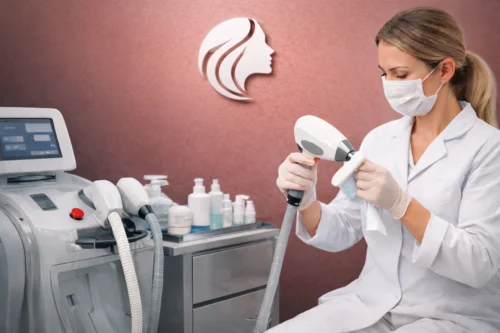
In the aesthetic beauty industry, aesthetic device maintenance such as lasers, IPL, or energy-based technologies often raises sensitive questions:
Aesthetic device maintenance: compliance, transparency, and real responsibilities
Aesthetic device maintenance is a central issue in ensuring client safety, regulatory compliance, and the professionalism of aesthetic institutes. In the aesthetic beauty industry, the use of technological devices such as lasers, IPL, or other energy-based devices raises important considerations.
Addressing aesthetic device maintenance is not an administrative burden. Rather, it is an essential approach rooted in transparency, professionalism, and regulatory compliance.
Laser hair removal devices: not just aesthetic beauty industry tools
Contrary to certain common beliefs, many devices used in aesthetic beauty industry, particularly laser hair removal devices, are considered Class II medical devices according to Health Canada.
This classification indicates a moderate level of risk and entails specific regulatory requirements for both manufacturers and professional use.
These devices emit energy and, if improperly used or inadequately maintained, can lead to adverse effects such as burns or skin injuries. This is why oversight does not rely solely on staff competence, but also on compliance with the technical recommendations established by manufacturers.
Learn more: Medical device classification in Canada
The manufacturer’s role in aesthetic device maintenance and use
Health Canada requires medical device manufacturers to provide all necessary documentation to ensure the safe use of their devices throughout their entire lifecycle. In practice, this always includes guidance related to aesthetic device maintenance, inspections, or calibration, even if the exact format varies by manufacturer.
Without this information, a device simply could not be approved for use in Canada. Aesthetic device maintenance is therefore neither optional nor a best practice — it is an integral part of the regulatory framework.
Device ownership and service delivery: a frequently misunderstood distinction
A common issue concerns equipment ownership. Many institutes provide services using devices they own, while others operate differently: certified personnel sent to partner salons, rented equipment, or devices owned by the host salon.
In all cases, responsibility does not disappear. In the event of a complaint or dispute, what will be examined is not only device ownership, but the framework under which the service was delivered: the type of device used, its approval status, manufacturer recommendations, and applicable maintenance records. These elements may be required even if they are not explicitly mentioned in a consent form.
Informed consent: informing, not avoiding obligations
Informed consent is not a tool to protect oneself in the event of a problem, nor to transfer an existing responsibility. Its purpose is to clearly and honestly inform clients and to demonstrate that the institute operates according to professional standards.
Mentioning aesthetic device maintenance in an informed consent form helps inform clients without creating additional obligations.
Stating that devices used are approved and maintained according to manufacturer recommendations does not create new responsibility — it reflects an existing regulatory obligation and contributes to building client trust.
Conversely, removing any reference to safety or device maintenance can weaken an institute’s professional posture by giving the impression of a lack of transparency.
Best practice for institutes: a responsible and transparent approach toward clients
When an institute wishes to avoid ambiguity, best practice consists of clearly informing clients about the framework in which services are provided. This includes accessible policies explaining how devices are used, maintained, and supervised, as well as a clear distinction of responsibilities related to equipment use.
Informed consent is not a tool to evade obligations. Its role is to inform clients and demonstrate that the institute operates according to professional standards. This approach reflects transparency, compliance, and professionalism.
Choosing the right digital tools for client record management
This is exactly the approach we take with the ready-to-send informed consent forms available in our software.
Clear, structured documents designed to reflect the operational realities of aesthetic beauty industry and current regulatory requirements.
Discover our standardized online forms, available in the integrated Library of our software and designed by highly qualified professionals.
This library helps you save valuable time when implementing a client record management software. It offers consents adapted to various aesthetic beauty industry services and to the laws in force in your province.
A turnkey solution to simplify compliance and integrate your online software in under 30 minutes.
Our documents take into account best practices related to the aesthetic device maintenance, while adapting to the operational realities of institutes.
To explore another key compliance topic, read our article: Aesthetic clinics contract– Understanding your obligations for services requiring a series of visits
Tuesday, January 28, 2026 | © Esthetik Vault Inc. All rights reserved.